Personal Safety for First Responders: Going Back to the Basics
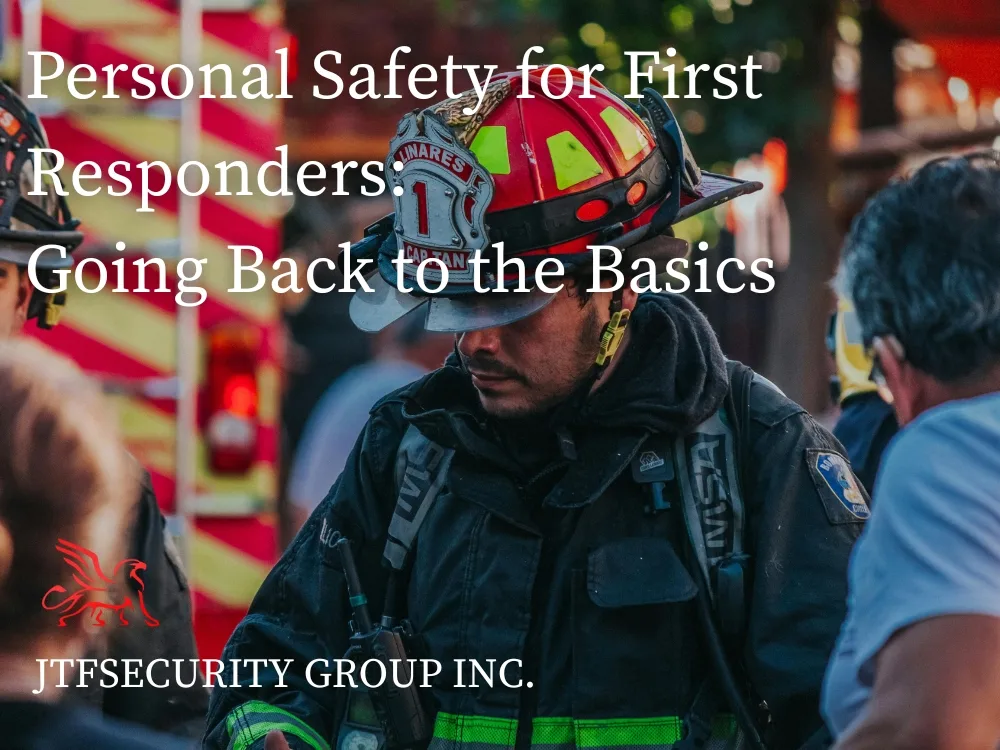
First responders face an elevated risk of encountering aggression and violence. Whether it’s a chaotic scene involving a mental health crisis, a domestic dispute, or a volatile crowd, the likelihood of facing physical threats is significantly higher than what the general public experiences. This isn’t just anecdotal — it’s supported by data, frontline experience, and countless training hours.
But in the heat of a dynamic incident, when adrenaline is high and decision-making time is short, personal safety boils down to fundamentals. And it’s often the basics — those simple, tactical habits — that protect responders from injury or worse.
Here’s a reminder of what every professional should return to when things start to escalate.
1) Hands: Watch Them. Show Them. Raise Them.
Hands are the first and best indicators of intent. They’re also the most common source of danger — whether it’s a concealed weapon, a sudden strike, or an attempt to grab. Always know where a subject’s hands are.
At the same time, your own hands communicate volumes. Keeping them visible — palms open and relaxed — signals that you’re not a threat. As a situation escalates, raising your hands slightly (elbows bent, palms outward) serves two purposes: it calms the subject and positions you defensively. It’s a universal, nonverbal message: “I’m not here to hurt you — but I’m ready to protect myself.”
2) Watch the Eyes
A person’s eyes often reveal what their body is about to do. A shift in gaze — toward an exit, toward your equipment, or away from you altogether — can be a precursor to movement or aggression. Watching where someone looks gives you a mental map of their next likely move.
3) Keep or Create Distance
Distance buys time, and time gives options. Whether it’s to de-escalate, reposition, or respond defensively, space is your ally. Avoid closing the gap unless absolutely necessary — and if you have to, know how to exit it quickly.
4) Use Barriers
Anything between you and a potential threat is a safety advantage. A parked vehicle, a doorframe, a table — these are not obstacles, they’re tools. Barriers can protect you from strikes, slow down movement toward you, and force subjects to show their intentions.
5) Disengage when Appropriate
Disengagement isn’t retreat — it’s strategy. If the risk outweighs the benefits, or if you’re unable to establish safety, stepping back may be the most professional decision you make that day. Your priority is not to win every exchange — it’s to manage it safely.
6) Always Have an Exit Strategy
Your exit strategy should be created on arrival and within moments of entering any space. Learn to assess spaces from the exterior. Any secondary means of egress? Leave lights on when possible.
Final Thought:
Personal safety is a discipline, not a reflex. For professional responders, these fundamentals must live at the surface — ready to deploy in a split second. Training, experience, and team support all matter. But so does practicing the basics, until they’re instinct.
Because when pressure is high and seconds count, it’s not the complex techniques that protect you. It’s the simple ones, done well.
Interested in learning more? JTFAcademy offers several online courses to help support safety and survival learning, such as Personal Protection Essentials and Tactical Flashlight. We also have a course tailored to frontline response workers looking to advance their professional development: EMS SST: Emergency Medical Services Safety & Survival Training.